 Pin It
 There's something almost meditative about the smell of chickpeas hitting hot oil, that moment when your kitchen fills with the aroma of toasted spices and you know you're about to make something memorable. I discovered proper falafel technique years ago when a friend's grandmother took pity on my sad, flat attempts and walked me through the whole process—turns out, soaked dried chickpeas, not canned ones, make all the difference. That afternoon, watching her form perfect little spheres with practiced hands while sharing stories about Damascus mornings, I realized falafel isn't just food; it's a quiet way of saying you care enough to do something right.
I made these for a roommate who'd been traveling in Lebanon, and she took one bite and got this faraway look, like she was standing in a market in Beirut again—that's when I knew I'd gotten something right. The best part was watching her come back for seconds while barely pausing between bites, and later, when she asked if I'd write down the recipe so she could teach her partner. Food has this quiet power to transport people, and falafel pita pockets seem to do it every single time.
Ingredients
- Dried chickpeas, soaked overnight: Using dried chickpeas instead of canned gives you that perfect dense texture—canned ones absorb too much moisture and your falafel turns into mush, trust me on this hard-earned lesson.
- Fresh onion, garlic, parsley, and cilantro: These aren't just flavor; they're what makes falafel taste alive and green inside, so don't skimp or substitute with dried herbs.
- Ground cumin and coriander: These warm spices are the backbone, and toasting them in your palm briefly before measuring somehow makes them taste even more potent.
- Baking powder and all-purpose flour: The flour helps bind, while baking powder creates those tiny air pockets that make falafel crispy outside and tender within.
- Tahini paste: This is your creamy anchor, and good quality matters—look for a jar that's been stirred so the oil isn't sitting lonely on top.
- Lemon juice: It cuts through the richness of tahini and brings everything into focus, like turning up the brightness on a photo.
- Pita bread, fresh vegetables, and cold water: The pita should be warm when you fill it, the vegetables should be crisp and cool, and the water in your tahini sauce should be truly cold so the paste loosens without becoming grainy.
Tired of Takeout? 🥡
Get 10 meals you can make faster than delivery arrives. Seriously.
One email. No spam. Unsubscribe anytime.
Instructions
- Start with properly prepared chickpeas:
- Soak your dried chickpeas overnight in plenty of water, then drain and pat them completely dry—wet chickpeas will make your mixture soggy and sad. This is non-negotiable.
- Build your base in the food processor:
- Pulse the chickpeas with onion, garlic, fresh herbs, and spices until the mixture looks like coarse sand and holds together when you squeeze it. You want texture here, not a smooth paste.
- Let it rest in the cold:
- Refrigerating for 30 minutes makes the mixture easier to shape, though honestly, if you're impatient like me, you can skip this and just wet your hands as you go. The cold version is just more forgiving.
- Heat your oil to the right temperature:
- Use a kitchen thermometer if you have one—350°F is the sweet spot where falafel turns golden and crispy without burning. If your oil smokes or a test piece browns in five seconds, it's too hot.
- Form and fry with confidence:
- Wet hands keep the mixture from sticking, and working quickly means your oil temperature stays steady. Fry in small batches so the temperature doesn't plummet, and listen for that satisfying sizzle that tells you things are happening.
- Make the tahini sauce silky:
- Whisk tahini with lemon juice and garlic first, then add cold water very gradually, stirring constantly—rushing this step creates lumps. The sauce should pour slowly but smoothly, like something that's just decided to cooperate.
- Assemble like you're building something precious:
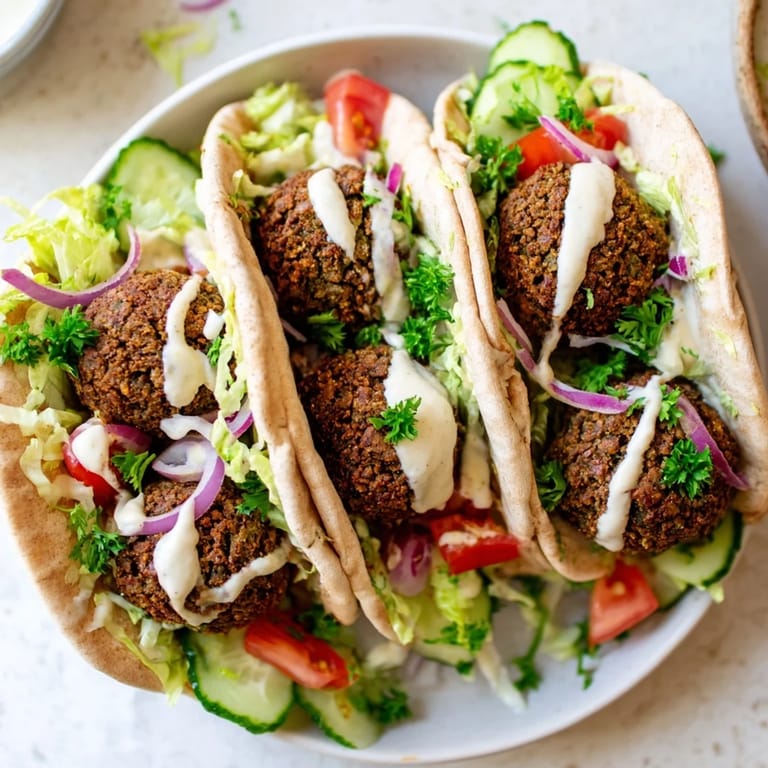
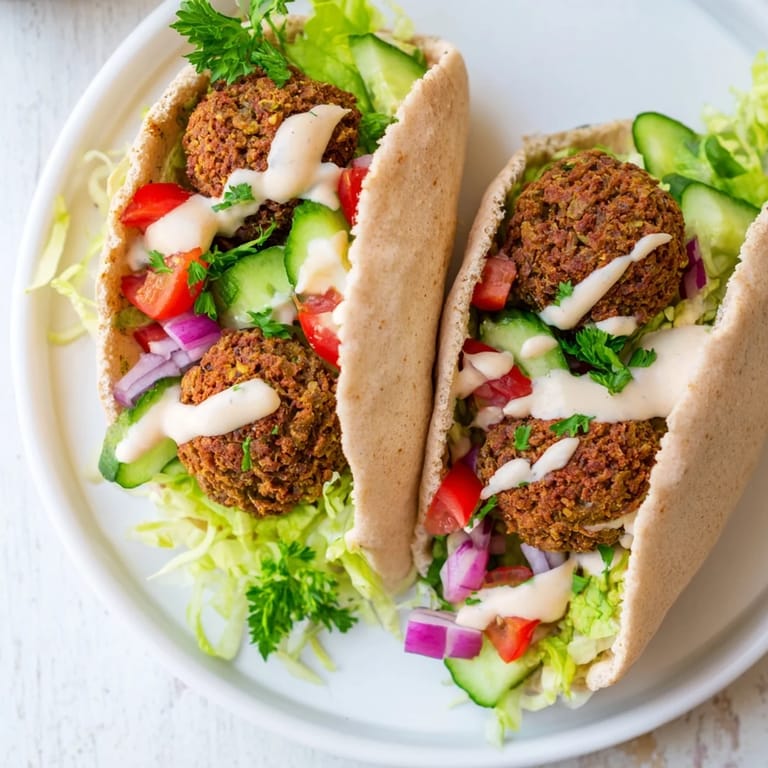
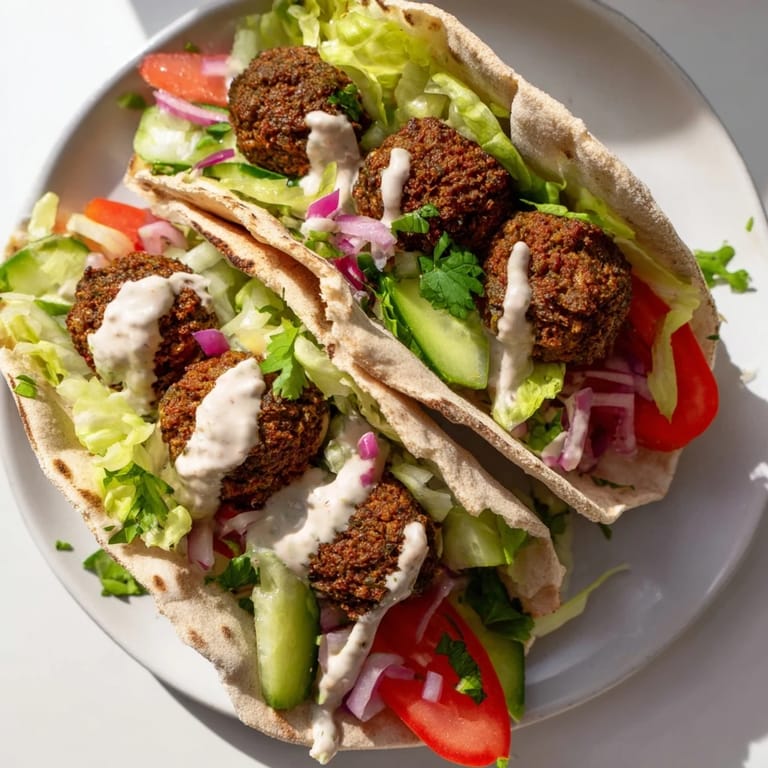
- Warm pita, cool vegetables, hot falafel, and that creamy sauce—layering is everything here. Cut pitas in half, stuff generously, drizzle, and serve immediately while the contrast of temperatures is still magic.
 Pin It
There's a moment, right after you bite into a warm pita and the tahini sauce hits your tongue, when you realize why this dish has survived centuries and traveled across continents—it's simply complete. Every element plays its part, and somehow, together, they're greater than the sum of their individual deliciousness.
The Secret of Soaked Chickpeas
Dried chickpeas soaked overnight create a totally different texture than their canned cousins, and this detail changes everything about your final result. The starch content and moisture balance shift in a way that makes your falafel properly dense, with that signature crispy-outside, creamy-inside quality that feels almost indulgent. When you taste the difference once, you'll never go back, and you'll probably become that person who dramatically explains why to anyone making falafel.
Tahini Sauce and Temperature Control
The tahini sauce is where texture becomes an art form, and cold water is your secret weapon here. Whisking it in slowly transforms what started as thick sesame paste into something pourable and luxurious, coating every bite of falafel and vegetable with creamy richness. The cold water also prevents the sauce from seizing, which happens when warm water hits tahini too quickly and creates little grainy pockets instead of smooth creaminess.
Building Your Perfect Bite
The assembly is where all your careful work gets to shine, and it deserves attention even though it seems simple. Warm pita contrasts beautifully with cool, crisp vegetables, and layering them properly ensures every bite has lettuce, tomato, cucumber, and falafel in balance.
- Cut your pita in half to create actual pockets rather than trying to stuff a whole round, which inevitably tears and spills.
- Place lettuce first as a moisture barrier so your pita doesn't get soggy immediately.
- Add falafel while it's still warm, then vegetables, then that final drizzle of tahini that brings everything into focus.
 Pin It
 These pita pockets are the kind of meal that makes you feel simultaneously nourished and happy, which is honestly the best thing food can do. Once you've mastered the falafel, you'll find yourself making them whenever people you care about need feeding.
Recipe Questions & Answers
- → What is the best way to soak chickpeas for falafel?
Soak dried chickpeas in plenty of water overnight (at least 8 hours) to soften them for blending into a perfect falafel mixture.
- → How can I make the falafel crispy when frying?
Use enough vegetable oil heated to about 350°F (175°C) and fry the falafel in small batches, turning only when they are golden brown on one side to maintain crispiness.
- → Can the tahini sauce be adjusted for consistency?
Yes, whisk in cold water gradually into tahini, lemon juice, and garlic until smooth and pourable, adjusting to your preference.
- → Are there alternatives to frying falafel?
For a lighter option, falafel can be baked at 400°F (200°C) for 20–25 minutes, turning halfway to achieve a crispy texture with less oil.
- → What vegetables complement falafel pita pockets?
Fresh shredded lettuce, diced tomatoes, sliced cucumbers, and red onions add freshness and crunch, balancing the rich falafel and sauce.
- → Can I prepare falafel mixture ahead of time?
Yes, refrigerate the shaped falafel mixture for about 30 minutes to firm up, making it easier to handle before frying or baking.