 Pin It
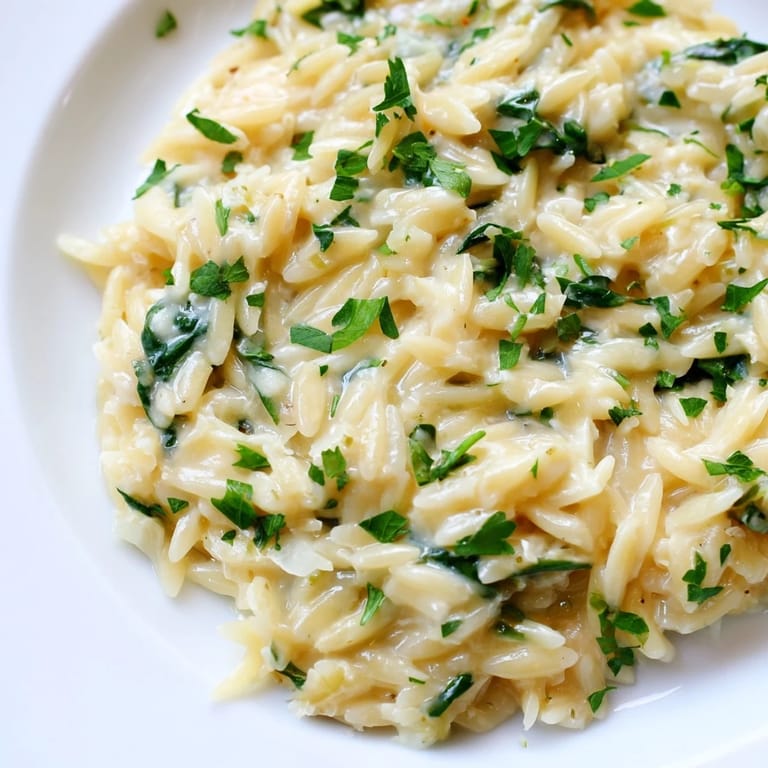
 There's something almost meditative about the way orzo absorbs broth in a single pot, transforming from tiny rice-shaped pasta into something creamy and impossibly comforting. I discovered this dish on a cold Tuesday evening when I had minimal ingredients but maximum craving for something that felt like a warm hug. One pot, twenty minutes, and suddenly dinner wasn't just sustenance—it was an experience. The kind of meal that makes you understand why people gather around kitchen tables.
I made this for my sister on a Friday when she'd had the kind of week that required comfort food, not conversation. She walked in, smelled the garlic and cream simmering, and just sat at the counter while I finished cooking. We didn't talk much, but when she tasted it, something shifted—the kind of quiet moment that happens when food does exactly what it's supposed to do.
Ingredients
- Orzo pasta: These tiny rice-shaped pasta pearls are the soul of this dish—they cook directly in the broth, soaking up all the flavor while releasing starch that naturally thickens the sauce.
- Butter: Start here to build a flavorful foundation and coat the orzo before adding liquid, which helps everything come together with silky richness.
- Yellow onion: Diced small and cooked until translucent, it dissolves into the sauce and adds subtle sweetness that balances the cream and cheese.
- Garlic: Three cloves minced fine release their fragrance quickly—be careful not to brown them, or you'll get bitter instead of bright.
- Vegetable broth and milk: The liquid base that becomes sauce; using low-sodium broth lets you control the salt and taste the vegetables themselves.
- Heavy cream: Added at the end to create that signature velvety texture that makes people ask for the recipe.
- Parmesan cheese: Freshly grated makes all the difference—it melts smoothly and adds umami depth that bottled versions can't match.
- Baby spinach: Stirred in at the last moment, it wilts into the warm pasta without becoming tough or losing its color.
- Fresh parsley: A handful scattered on top just before serving adds brightness and reminds you this is a living, breathing dish, not just comfort food.
Tired of Takeout? 🥡
Get 10 meals you can make faster than delivery arrives. Seriously.
One email. No spam. Unsubscribe anytime.
Instructions
- Build your aromatics base:
- Melt butter in a large deep skillet over medium heat, then add diced onion and sauté for 3 to 4 minutes until it turns translucent and soft. You're not looking for color here—just for the onion to surrender to the heat and become part of the foundation.
- Wake up the garlic:
- Stir in minced garlic and let it cook for exactly one minute, until the smell hits you and fills the kitchen. This brief window is crucial; any longer and it turns bitter.
- Toast the orzo:
- Add the pasta to the pan and stir constantly for two minutes, coating each grain in butter and letting it turn slightly golden. This toasting step is subtle but essential—it adds a depth that raw pasta never develops.
- Add your liquid:
- Pour in the vegetable broth and milk, stir well to combine, and bring everything to a gentle simmer. You'll see the liquid start to bubble at the edges; resist the urge to cover it, as you want the pasta to absorb the broth evenly.
- Cook until tender:
- Stir frequently over the next 10 to 12 minutes as the orzo softens and the liquid reduces and thickens naturally. The constant stirring prevents sticking and helps the sauce develop its creamy consistency without added cornstarch.
- Finish with cream and cheese:
- Remove from heat and stir in heavy cream, freshly grated Parmesan, and mozzarella if you're using it. The residual heat melts everything into a luxurious sauce that coats each piece of pasta.
- Add greens and final seasonings:
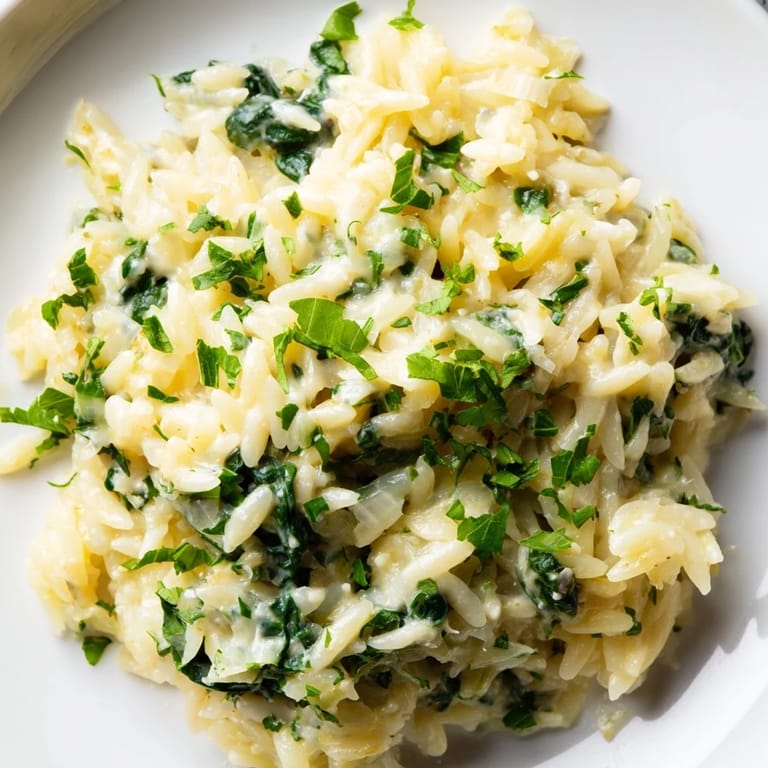
- Fold in the spinach and watch it wilt into the warm pasta in less than two minutes, then taste and adjust salt, pepper, and red pepper flakes to your preference. Finish with fresh parsley for color and a hint of herbaceous brightness.
 Pin It
This dish became my go-to when I realized that cooking doesn't always need to be complicated to feel special. There's something quietly powerful about a meal that takes thirty minutes from thought to table, requires only one pot, and tastes like someone spent hours thinking about your comfort.
Why One-Pot Cooking Changed Everything
The magic of cooking pasta directly in broth isn't just about convenience—it's chemistry. As the orzo releases its starch into the liquid, something miraculous happens: that starch naturally emulsifies with the cream, creating a sauce that's genuinely creamy without needing any thickening agents. It's the same technique Italian nonnas have used for generations, but somehow it still feels like a revelation when you experience it yourself. The first time I watched this transformation happen, I understood why this dish became viral—it's not pretentious, it's just honest cooking that delivers exactly what it promises.
Variations That Actually Work
The base recipe is flexible because the technique is so solid. I've added roasted cherry tomatoes at the end for brightness, stirred in cooked shrimp for protein, even swapped spinach for crispy kale when that's what I had. Each version feels intentional rather than improvised because the creamy orzo foundation is strong enough to support additions without falling apart. The key is treating any additions as supporting actors, not lead roles—you want to taste the orzo and cream first, then whatever else you've included.
Seasoning and Tasting as You Go
I learned this the hard way: seasoning at the end matters more than seasoning at the beginning. Because the broth reduces as the orzo cooks, flavors concentrate and intensify, so what seemed under-seasoned halfway through becomes perfectly balanced at the finish. Taste constantly during the final minutes and trust your palate—salt and pepper are forgiving, and you can always add more.
- Red pepper flakes add a whisper of heat that wakes up the creaminess if your dish feels one-note.
- A squeeze of fresh lemon juice stirred in at the very end brightens everything without making the dish taste acidic.
- Don't skip the fresh parsley garnish—it's not decoration, it's a flavor component that adds a grassy counterpoint to all that cream.
 Pin It
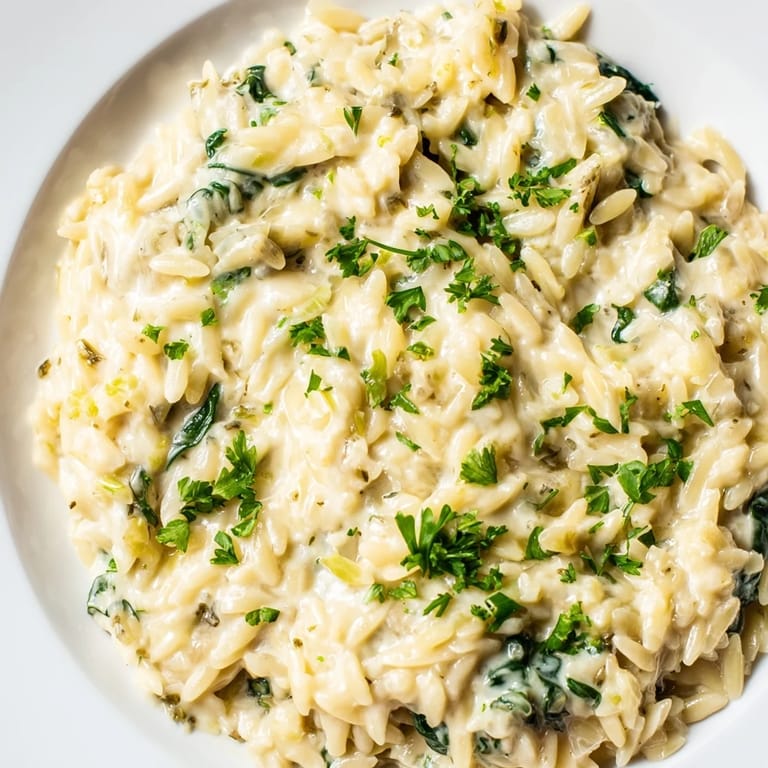
 This is the kind of recipe that reminds you why cooking matters. It's simple enough to make on a Wednesday, elegant enough to serve to guests, and comforting enough to make you believe that good food and good moments can happen in the same thirty minutes.
Recipe Questions & Answers
- → Can I use a different type of pasta instead of orzo?
Small pasta shapes like acini di pepe or pastina can work similarly, though cooking times may vary. Adjust accordingly and watch for tenderness.
- → How can I make this dish vegan-friendly?
Replace butter with plant-based margarine and use dairy-free cream and cheese alternatives. Ensure the broth is vegetable-based and vegan-certified.
- → Is it possible to prepare this without a skillet or pot?
A deep saucepan or Dutch oven works well. The key is even heat and enough depth to allow stirring without spilling.
- → What variations can enhance flavor or nutrition?
Adding sautéed mushrooms, cooked chicken, or shrimp increases protein. Swapping spinach for kale or arugula, or adding sun-dried tomatoes, boosts flavor and nutrients.
- → How should leftovers be stored and reheated?
Store cooled portions in airtight containers in the refrigerator for up to 3 days. Reheat gently on the stove or microwave, adding a splash of milk or broth to restore creaminess.